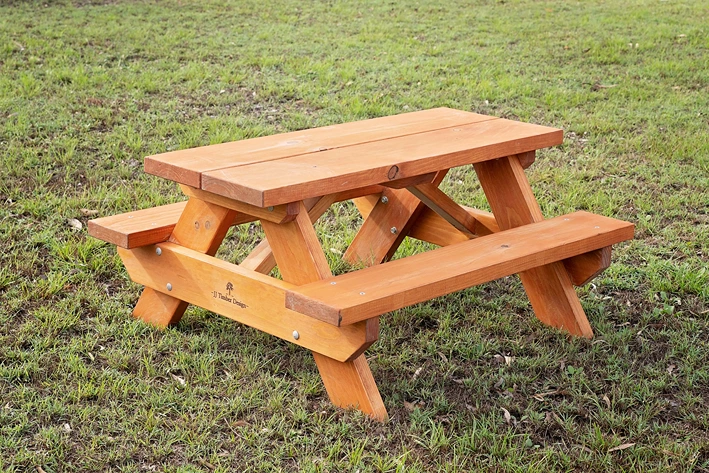
Timber is a natural material. It reacts to what is happening around it, sun, rain, humidity, heat, and the shifts between them throughout the year. That is not a flaw. It is just how timber works, and when you understand it, looking after an outdoor table becomes a lot simpler.
We have been building timber picnic tables in Jimboomba, Queensland since 2021. Our tables go into backyards, beer gardens, school yards, childcare centres, cafes, and venues like Dreamworld and Binna Burra Lodge. They all live outside. We have seen firsthand what Australian weather does to timber over time, what causes problems and what does not.
Here is the practical version.
Rain is the weather factor people worry about most, and in most cases it is less of a problem than they expect. A well-built timber table is designed to get wet. The issue is not the rain itself, it is what happens to the moisture afterwards.
When water can drain away and the timber can dry out between showers, rain does very little structural damage. We design our tables with gaps between the boards specifically for this reason. Water needs somewhere to go. A solid-top table with no drainage will hold moisture against the timber for hours after rain, which is where problems start.
Over time, repeated wet and dry cycles will raise the grain slightly, giving the surface a rougher texture than when the table was new. This is normal and cosmetic. A light sand and a fresh coat of oil brings it back. It is not a sign the table is failing.
In poorly sealed or untreated timber, prolonged moisture can also cause surface mould, particularly in shaded positions that stay damp longer after rain. A penetrating outdoor oil applied annually prevents this by keeping the surface less absorbent.
In parts of Queensland and the Northern Territory where the wet season brings extended periods of heavy rain, timber tables need a bit more attention than they would in a drier climate. Good drainage, adequate airflow under and around the table, and more frequent oiling, every six months rather than annually, makes a real difference in these environments.
Tables sitting directly on constantly saturated ground are also at more risk than those on well-drained pavers or decking. If the legs are always in wet soil, the base of the table dries more slowly and wears faster.
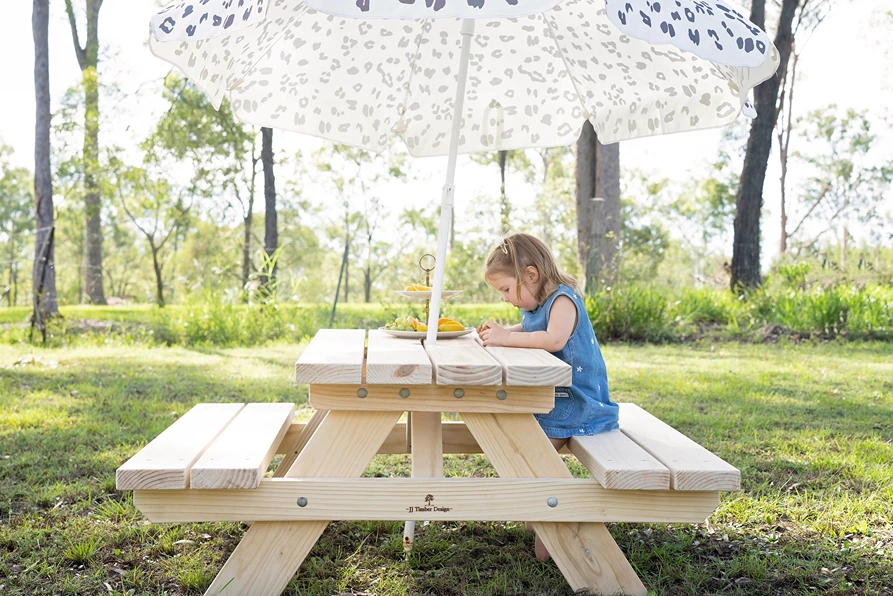
Australia has some of the highest UV levels in the world, and timber responds to it. This is the weather factor that has the most visible effect on outdoor tables over time.
UV rays break down the surface fibres of the timber and bleach the natural colour. An oiled warm-toned table left unsealed will gradually develop a silvery-grey patina. In coastal and rural settings, a lot of people prefer that weathered look. It is not damage, it is character.
Where UV does cause a real problem is when the surface dries out completely between oiling. Dry timber cracks along the grain, starting as fine surface checks that deepen over time if not addressed. The fix is simple: re-oil before the timber gets to that point. Most outdoor tables in full sun benefit from oiling twice a year rather than once.
High temperatures accelerate the drying of the surface and increase the rate at which timber expands and contracts. In summer heat, timber expands slightly. On cooler nights or through winter, it contracts. This movement is normal and expected in any outdoor timber furniture.
The reason it matters is hardware. Fixings that do not allow for any movement will put stress on the timber around them as the table expands and contracts through the seasons. We use galvanised fittings sized to handle that movement without loosening or cracking the surrounding timber. Cheap fittings in a hot outdoor climate tend to work loose within a season or two for exactly this reason.
Browse our heavy duty picnic tables built specifically for high-exposure commercial settings.
Not sure which build suits your climate and setting? Get in touch and we will help you work out the right timber and finish before you order.
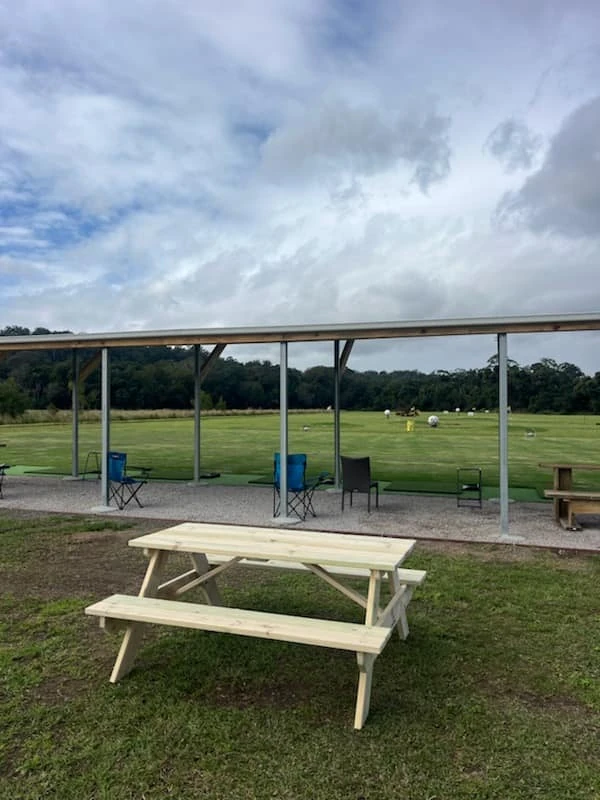
Humidity is the quiet one. It does not announce itself the way rain does, but it has a constant effect on outdoor timber.
Timber absorbs moisture from the air, not just from direct rain contact. In humid conditions, the boards swell slightly. When humidity drops, they contract again. This cycle repeats throughout the year and is more pronounced in Queensland, coastal areas, and tropical climates than it is in drier southern states.
A well-built table is designed to handle this movement. Gaps between the boards, fixings that allow controlled flex, and stable timber selection all contribute to a table that adapts naturally rather than fighting against what the climate is doing.
If you notice small gaps between the boards at certain times of year or slight changes in tabletop width, that is the table responding to humidity changes. It is not a defect. It is timber doing what timber does.
The effect of weather on timber is not constant throughout the year. Each season brings different conditions, and adjusting care slightly across the year is easier than following a rigid schedule that does not match what is actually happening outside.
Higher UV exposure and faster drying of the timber surface. This is when re-oiling matters most. If the surface is starting to look dry or grey, summer is the time to refresh it before the heat pushes surface cracks any deeper. Check fixings as expanded timber can sometimes hide loose bolts that become obvious when the table contracts again in autumn.
Falling leaves and organic debris settle on the tabletop and in the gaps between boards. This is worth clearing regularly because trapped organic matter retains moisture against the timber surface well after the rain has stopped. A quick brush-down every few weeks through autumn takes less than two minutes and makes a real difference.
Australian winters are mild by global standards, and outdoor timber tables do not need to be stored or covered through winter the way they might in colder climates. Longer wet periods do slow the drying time after rain, so airflow around and under the table matters more this time of year. Avoid positioning the table against a wall or fence where air cannot circulate.
Spring brings rapid shifts between wet and dry, which is when timber movement is often most noticeable. A light sand of any raised grain and a fresh coat of oil before the warmer months sets the table up well for heavy use through summer.
The good news is that protecting a well-built outdoor timber table is not complicated. Most of it comes down to a few straightforward habits.
For a full step-by-step routine, our timber furniture care and maintenance guide covers everything in detail.
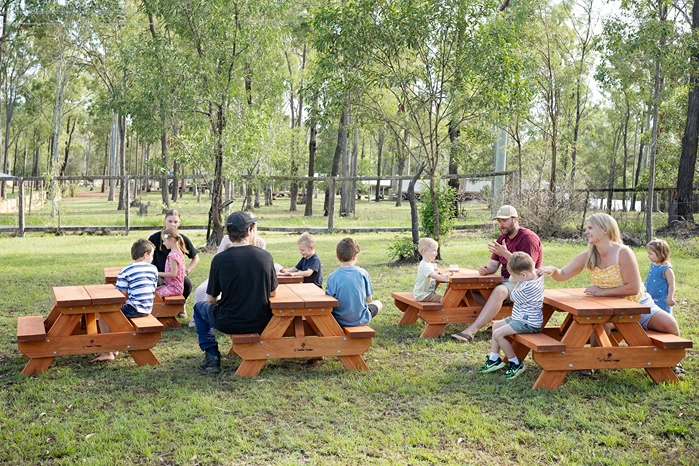
Not all timber handles Australian weather the same way, and matching the timber to the setting makes a genuine difference to how the table performs over time.
Treated pine is our most widely used outdoor timber. The treatment protects against termites, moisture damage, and fungal decay, making it suitable for permanent outdoor use across most Australian climates. It is practical, cost-effective, and handles year-round weather well with an annual oil. Most of our residential builds, school tables, and kids picnic tables are built in treated pine.
Hardwood is denser and naturally more resistant to moisture and wear. It is what we specify for coastal settings, high-traffic commercial spaces, and anywhere the table will be used hard and exposed to significant weather year round. It holds its shape better through humidity cycles and develops a richer character over time.
We used hardwood for the outdoor seating at Binna Burra Lodge in the Lamington National Park, which sits in a genuine bush environment through wet seasons and constant humidity. That is the kind of setting where the timber choice makes a real difference to how long the table performs.
Browse our hardwood picnic tables and standard picnic table range to see both options.
Understanding how weather affects timber picnic tables makes buying the right one a lot more straightforward. The weather is not the enemy. It is just the context the table needs to be built for.
One of our customers, Romy-Jean, put it better than we could when she reviewed her table: “This table will outlive humanity.” She ordered in a hurry for a housewarming and we fast-tracked it without cutting corners on the build. It has been outside since. That is the point of building things properly from the start.
We build from our workshop in Jimboomba and deliver Australia-wide. Whether your table is going into a shaded backyard in Brisbane, a coastal beer garden in Queensland, or a school yard that faces full weather year round, get a quote and we will help you choose the right timber, finish, and build for where it is going.
Also worth reading: our guide to how long timber picnic tables last and whether timber picnic tables can be left outside year round.
Rain does not damage a well-built timber table in normal use. The key is drainage and drying. Tables designed with gaps between boards drain quickly after rain, and timber that can dry out between showers handles wet weather without structural issues. Problems arise when moisture sits against the timber for extended periods, usually due to poor drainage design or no surface sealing.
UV exposure bleaches the surface of unsealed timber over time, turning it grey, and can dry out the surface enough to cause fine grain cracking if the timber is not regularly oiled. A penetrating outdoor oil applied once or twice a year significantly slows both effects. In Australian conditions where UV levels are high, twice-yearly oiling is worth the extra effort for tables in full sun.
Timber absorbs moisture from rain and humidity, which causes slight swelling. When conditions dry out, it releases that moisture and contracts again. This is normal behaviour for any natural timber outdoor furniture. Small gaps between boards, fixings that allow controlled movement, and stable timber selection all help the table adapt to this cycle without structural damage.
Once a year is enough for most settings. Tables in full sun, coastal areas with salt air, or high-traffic commercial settings benefit from oiling every six months. The easiest way to judge it is to look at the surface: if the timber looks dry, grey, or dull, it is time for an oil. Do not wait until cracks appear. See our care and maintenance guide for the full process.
Yes. Humidity causes timber to absorb moisture from the air and expand slightly, even without direct rain contact. In high-humidity climates like Queensland and coastal areas, this cycle of expansion and contraction is more pronounced. A well-built table with appropriate board spacing and fixings handles humidity movement naturally. Sealing the surface reduces how much moisture the timber absorbs in the first place.
Treated pine is practical and handles Australian outdoor conditions well in most settings, particularly residential, schools, and childcare centres. Hardwood offers greater density and natural moisture resistance, making it a better choice for coastal environments, high-traffic commercial settings, or anywhere the table faces particularly demanding conditions. Both can live outside year round with basic maintenance.