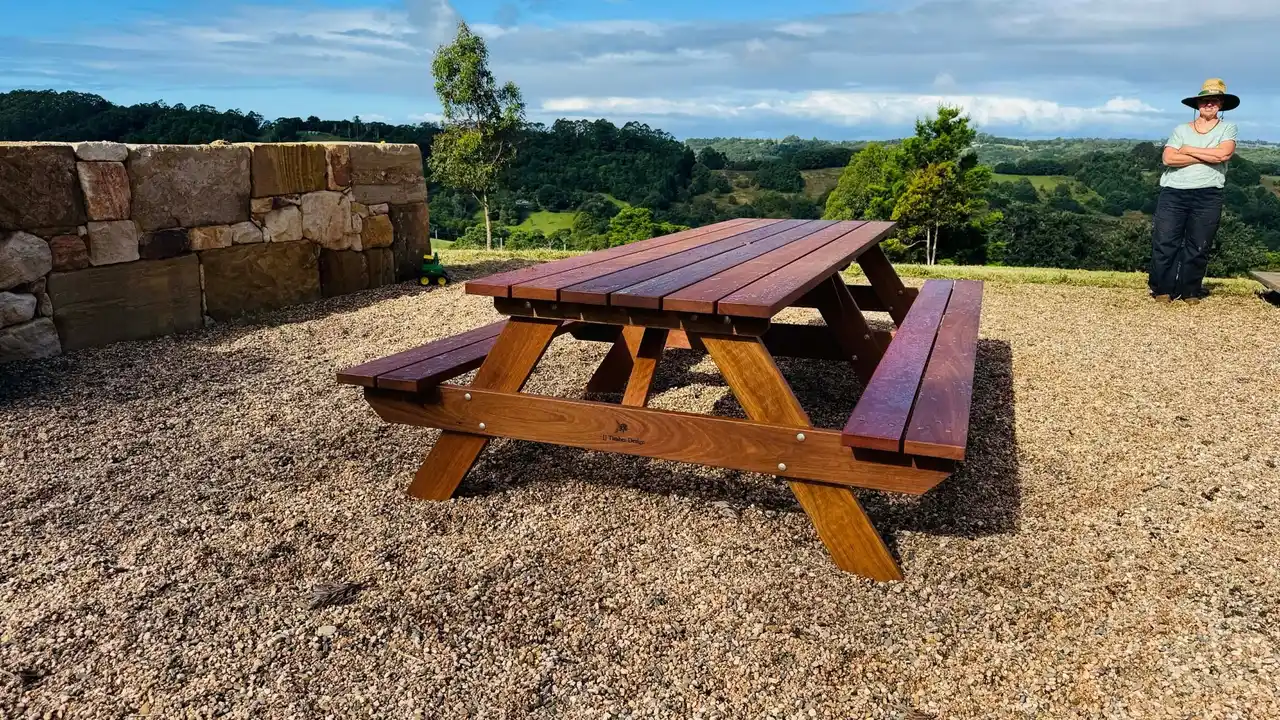
Short answer, yes. If the table is built properly and from the right timber, it can live outside in Australian conditions year round without losing strength or function.
We build from a workshop in Jimboomba, Queensland, and we have been doing it since 2021. We have seen our tables go into backyards in South East Queensland, beer gardens in coastal towns, school yards, childcare centres, and commercial venues like Dreamworld and Binna Burra Lodge. They stay outside. That is the whole point.
But there is a difference between a timber table that is genuinely built for outdoor use and one that will start showing its age within a year or two. That gap comes down to timber choice, construction quality, and a small amount of basic care. Here is what you actually need to know.
Timber moves. That is normal. It expands slightly in humidity, contracts in dry heat, and the surface will gradually change colour with UV exposure. A table that starts out oiled and warm-toned will develop a silvery-grey patina over time if left unsealed. A lot of people in coastal and rural settings actually prefer that look.
These are cosmetic changes. They do not affect the structural integrity of a well-built table.
What causes actual problems is not Australian weather. It is poor construction. Thin boards that flex and split. Frames without proper bracing that wobble and eventually rack. Hardware that corrodes and loosens over the first couple of seasons. A table built to a price rather than built to last will show all of that within 18 months, regardless of the climate.
A solid timber table with the right construction handles Australian outdoor conditions the way it is supposed to. The weather is not the enemy. The build is what matters.
These two things get confused a lot, and it is worth clearing up.
Weathering is surface-level. UV changes the colour of the timber. Rain raises the grain slightly. The finish dulls and eventually needs refreshing. None of that is structural. It is cosmetic, and most of it is reversible with a light sand and a fresh coat of oil.
Rot is structural. It happens when moisture is trapped in the timber for extended periods with nowhere to go. It is caused by poor drainage design, joints that collect water, or timber that was not treated or dried properly before it was built into furniture.
We design our tables with drainage gaps and open joints specifically so water does not sit in the timber after rain. That is a construction decision, not an afterthought. When moisture can drain and the timber can breathe and dry, rot is not a meaningful risk for a properly built table in normal Australian outdoor conditions.
For more on keeping timber in good shape long-term, our care and maintenance guide covers exactly what to do and when.
The two timber types we build with most often are treated pine and premium hardwood. Both can stay outside year round. The right choice depends on your setting and how the table will be used.
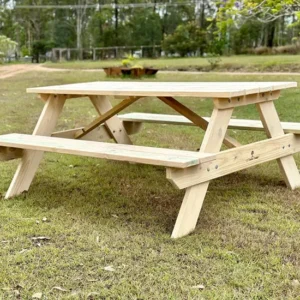
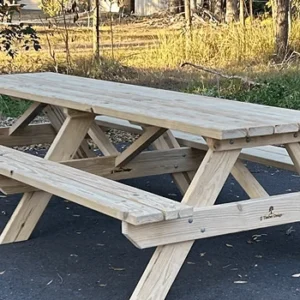
Treated pine is our most practical outdoor option and what we use for the majority of residential builds, school tables, childcare centre tables, and event hire stock. The treatment process protects against termites, moisture damage, and fungal decay, which means it handles permanent outdoor exposure well.
It does best with a penetrating outdoor oil finish and an annual re-coat, especially in high-exposure settings. With that basic care, a well-built treated pine table will last a decade or more.
Browse our standard picnic table range to see what we build in treated pine.
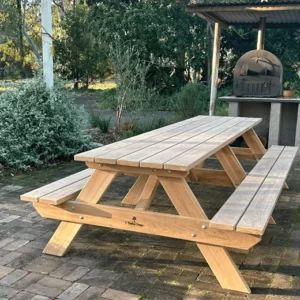
Hardwood is denser, heavier, and naturally more resistant to wear and moisture. It is what we specify for permanent outdoor dining settings, coastal venues, high-traffic commercial spaces, and anywhere the table is going to be used hard year round.
Australian hardwood species are recognised for their durability in outdoor construction. Hardwood develops character over time in a way treated pine does not, and it holds its shape better in environments with significant humidity or salt air.
We supplied Binna Burra Lodge in the Lamington National Park with outdoor seating that needed to hold up in a genuine bush environment through wet seasons, heavy humidity, and constant guest use. Hardwood is what makes that work.
See our hardwood picnic tables and heavy duty range for the options we build for demanding outdoor settings.
Not sure which timber suits your space? Get in touch and we will help you work it out before you order.
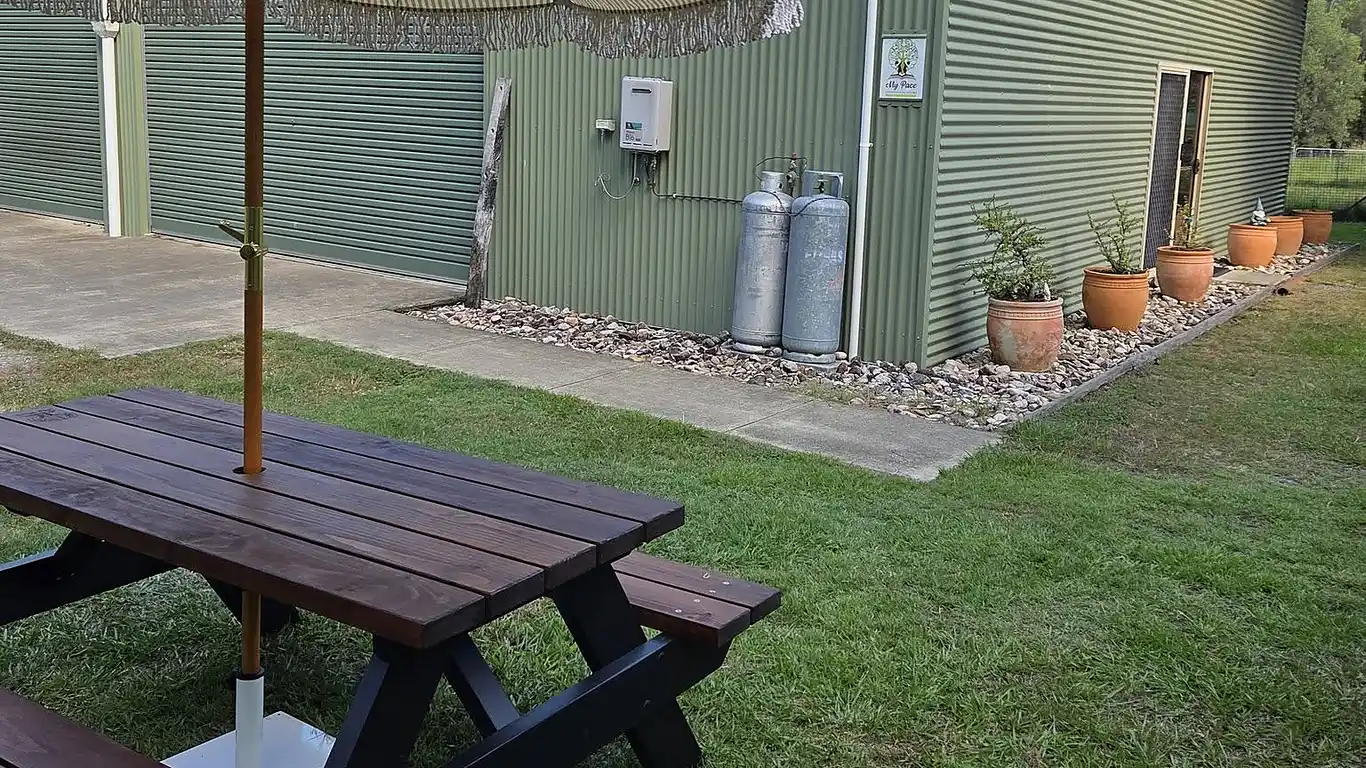
Generally, yes. A table under a pergola or in a covered outdoor area gets less direct rain, less UV, and dries faster after wet weather. All of that slows surface wear and reduces how often the finish needs refreshing.
But the build matters more than the shelter. A well-built hardwood table sitting in full weather will outlast a poorly built table with a roof over it. Cover helps. It does not compensate for a weak build.
If your table is going to live outside year round in full exposure, that is fine. Just make sure the timber and construction are appropriate for that. A table built for covered residential use will not perform the same way as one built for permanent outdoor commercial use.
The maintenance routine for an outdoor timber table is genuinely simple. Most people overcomplicate it.
That is genuinely all it takes. An hour of attention across a whole year and a solid timber table will stay in good shape for a decade or more. Our timber furniture care and maintenance guide covers the full process with step-by-step guidance.
Salt air increases finish wear and can accelerate surface corrosion on fittings. We recommend galvanised or stainless fittings for any coastal installation, which is standard on all our builds. Seal the timber surface more frequently, every six months rather than annually, and rinse the table down occasionally if it is in a high-salt-air position.
Cafes, beer gardens, schools, and venue spaces clean their outdoor furniture more often and put it through more daily use. Periodic hardware checks matter more here. Surface re-oiling may be needed more frequently depending on how often the table is cleaned and with what products. Avoid harsh chemical cleaners that strip the timber finish.
We supply commercial outdoor picnic tables and outdoor dining tables to venues across Australia. If you are fitting out a commercial space, get in touch and we will help you specify the right build for the conditions.
Lower traffic and typically more shelter means less frequent maintenance. An annual oil and a quick bolt check is usually all a residential table needs. Even in full weather exposure, a properly built table in a home backyard should go well over a decade with that basic routine.
Most questions about whether timber can handle outdoor conditions come down to whether the right timber was used and whether the table was built properly. When both of those things are right, the answer to the original question is straightforward: yes, timber picnic tables can be left outside year round in Australia.
We build from our workshop in Jimboomba and deliver Australia-wide. Whether you need a table for a backyard, a school, a café, or a commercial venue, get a quote and we will help you work out the right timber, finish, and size for where it is going.
Browse our full range: picnic tables, outdoor dining tables, kids tables, and heavy duty options for commercial settings.
Yes. Treated pine and hardwood picnic tables built for outdoor use are designed to stay outside permanently. Australian weather is not the problem. The build quality is what determines how a table holds up over time. A properly constructed table with the right timber and hardware will handle year-round outdoor exposure without losing strength or structural integrity.
No. Australian winters are mild enough that storage is not required for a properly built outdoor timber table. If the table can dry properly after rain and is not sitting in pooled water, it will be fine outdoors through winter. Bringing it under cover or using a breathable cover during extended periods of heavy rain will extend the life of the finish, but it is not essential.
Once a year for most settings. A light re-oil and a quick bolt check is all a well-built outdoor timber table needs in a typical residential setting. Coastal settings and high-traffic commercial settings benefit from more frequent oiling, every six months rather than annually. See our care and maintenance guide for the full routine.
Weathering is cosmetic. UV exposure changes the surface colour and dulls the finish over time. It does not affect the structural integrity of the table and can be reversed with a sand and re-oil. Rot is structural and happens when moisture is trapped in the timber for extended periods. A well-built table with drainage gaps and galvanised fittings is designed to prevent that. Weathering is expected. Rot is a sign of a construction problem, not weather.
Hardwood species, particularly Australian hardwoods, offer the longest outdoor lifespan due to their density and natural moisture resistance. Treated pine is a strong and practical alternative at a lower price point, especially for residential settings, schools, and childcare centres. Both can stay outside year round. The right choice depends on your setting, budget, and how the table will be used.
Yes, when they are built to commercial specifications. That means solid timber construction, proper bracing, galvanised fittings, and a finish suited to regular cleaning and outdoor exposure. We build and supply commercial outdoor tables to venues, schools, cafes, and councils across Australia. Get a quote and we will help you work out the right spec for your setting.